

Wart, Skin Tag & Mole Removal
Warts, skin tags, and moles are among the most common benign skin lesions presenting in dermatology practice. While generally harmless, they can cause cosmetic concern, physical discomfort, or irritation — and in the case of moles, occasional features warrant dermatological evaluation to rule out atypical changes. Our dermatologists assess each lesion carefully before recommending the safest and most appropriate removal technique.
Warts
Warts are benign epidermal growths caused by the human papillomavirus (HPV). They are contagious and can spread through direct contact or via contaminated surfaces. Common types include common warts (verruca vulgaris), plantar warts (on the soles), plane warts (flat-topped), and filiform warts (on the face and neck). Treatment is chosen based on the type, location, size, and number of warts.
Skin Tags (Acrochordons)
Skin tags are small, soft, flesh-coloured outgrowths that typically appear in areas of skin friction — the neck, axillae, groin, eyelids, and beneath the breasts. They are completely benign and are removed for cosmetic reasons or when they become irritated by clothing, jewellery, or shaving.
Moles (Melanocytic Nevi)
Moles are pigmented lesions arising from clusters of melanocytes. Most moles are benign, but any lesion that changes in size, shape, colour, bleeds, or appears atypical should be evaluated with dermoscopy before removal. Moles are removed for cosmetic purposes, when they are repeatedly irritated, or when features warrant histopathological examination.
Removal Techniques
Electrocautery
Uses controlled electric current to burn and remove the lesion. Effective for skin tags, flat warts, and superficial moles. Quick procedure with minimal post-procedure care.
Cryotherapy
Liquid nitrogen is applied to freeze the lesion, causing it to blister and fall off over 1–2 weeks. Particularly effective for common and plantar warts. May require repeat sessions.
Surgical Excision / Shave Excision
Used for raised moles, larger skin lesions, or when histopathological analysis is indicated. The lesion is removed with a scalpel or shave technique under local anaesthesia. The specimen is sent for examination when clinically indicated.
Laser Removal
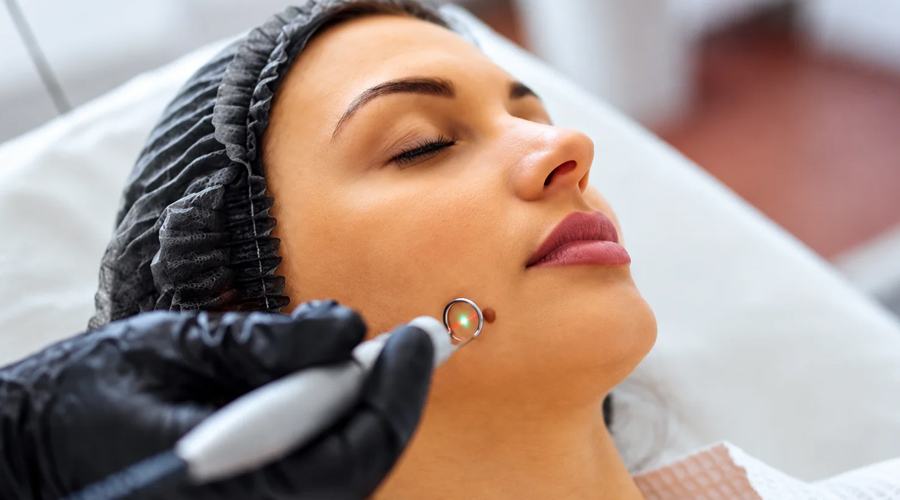
CO₂ or Er:YAG laser provides precise vaporisation of superficial lesions with minimal scarring. Suitable for flat or raised moles, skin tags, and certain wart types on cosmetically sensitive areas.
Chemical Treatment
Topical agents such as salicylic acid, trichloroacetic acid, or podophyllotoxin may be used for warts, particularly in children or for multiple lesions.
Benefits of Professional Removal
Dermatoscopic evaluation before removal to assess any atypical features.
Appropriate technique selection for each lesion type and location.
Histopathological analysis available when clinically indicated.
Minimal scarring with skilled, technique-specific removal.
Safe treatment in cosmetically sensitive areas such as the face and eyelids.
What to Expect
Most removal procedures are quick, well-tolerated under local anaesthesia, and require minimal downtime. Warts may require multiple treatment sessions depending on the type and response. A small scar is possible with any skin procedure — the technique is chosen to minimise this risk. Post-procedure care instructions are provided to support optimal healing.