

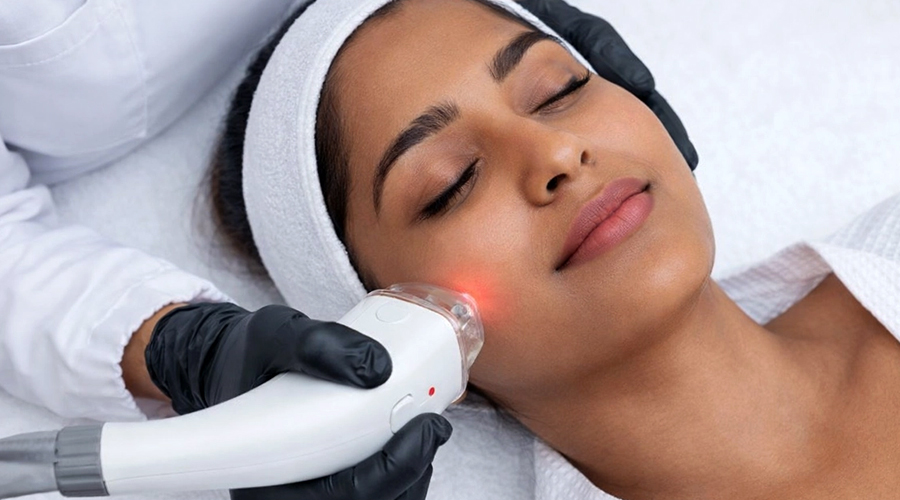
Laser Toning (Pico / Q-Switch Laser)
Laser toning is an advanced, non-ablative laser treatment designed to target and reduce pigmentation, improve skin tone, and promote a clearer complexion. Using Q-switched Nd:YAG or picosecond (pico) laser technology, the treatment delivers precise energy pulses that break down excess melanin deposits without damaging the surrounding skin. It is particularly effective for melasma, sun spots, post-acne marks, and overall uneven skin tone.
How Laser Toning Works
The laser emits concentrated light energy at specific wavelengths that are selectively absorbed by melanin in the skin. This shatters pigment particles into smaller fragments, which are then gradually cleared by the body's natural immune response. Unlike ablative lasers, laser toning operates at lower fluence settings that are safe for repeat sessions and suitable for darker skin types when used correctly.
Q-Switched Nd:YAG Laser: Delivers energy in nanosecond pulses; suitable for epidermal and some dermal pigmentation. Widely used for melasma, sun spots, and general skin toning.
Picosecond Laser (Pico Laser): Delivers energy in ultrashort picosecond pulses, generating a photoacoustic effect that more efficiently fragments pigment particles. Often preferred for stubborn pigmentation and post-acne marks.
Conditions Treated
Melasma and hormonal pigmentation.
Post-acne marks and post-inflammatory hyperpigmentation.
Sun spots and solar lentigines.
Freckles and general facial pigmentation.
Uneven skin tone and dullness.
Periorbital pigmentation (dark circles).
The Treatment Process
1. Pre-Treatment Assessment
A thorough evaluation of pigmentation type, depth, and skin type is performed to select the appropriate laser, wavelength, and fluence. Pre-treatment priming with topical agents may be recommended to improve outcomes and reduce the risk of post-inflammatory pigmentation.
2. Treatment Session
A protective eye shield is placed before the session. The laser handpiece is passed over the treatment area with controlled energy settings. Most patients experience a mild snapping sensation and some warmth. The session typically takes 20–40 minutes depending on the area treated.
3. Post-Treatment Care
Mild redness or a subtle darkening of treated spots may occur immediately after the session and typically resolves within a few hours to days. Gentle skincare, moisturisation, and strict sun protection are essential post-treatment.
Benefits of Laser Toning
Non-ablative — no open wounds or significant downtime.
Targets melanin selectively for precise pigmentation reduction.
Suitable for multiple skin types, including South Asian skin, when used at appropriate settings.
Improves overall skin tone, radiance, and clarity.
Can be combined with chemical peels or topical therapy for enhanced results.
What to Expect
Most patients require a series of 4–8 sessions spaced 2–4 weeks apart for optimal results. Visible improvement is gradual. Melasma may show temporary darkening after initial sessions before improving. Long-term results depend on consistent sun protection and maintenance therapy. Your dermatologist will design a treatment plan tailored to your pigmentation type and goals.