

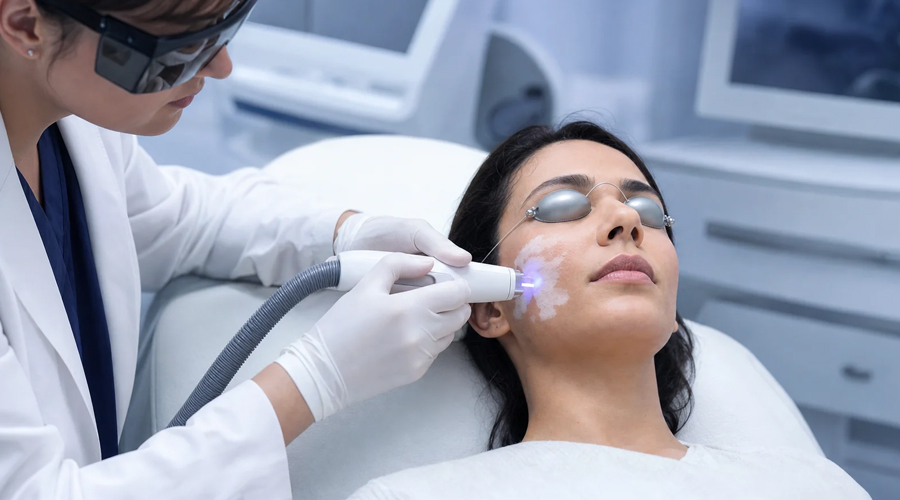
Vitiligo Surgery
Vitiligo surgery refers to a group of surgical and procedural techniques designed to restore pigmentation to stable, depigmented vitiligo patches that have not responded to or are not suitable for medical therapies alone. By transferring functioning melanocytes from pigmented donor skin to the depigmented recipient site, surgical methods can achieve effective repigmentation in carefully selected patients.
Who Is a Suitable Candidate for Vitiligo Surgery?
Not all vitiligo patients are candidates for surgical treatment. Careful selection is critical for success:
The vitiligo must be stable — no new patches or expansion for at least 1–2 years.
The patient should not have a history of koebnerisation (new vitiligo at sites of skin injury).
Medical treatments have been tried and have not achieved adequate repigmentation.
The affected areas are suitable in size and location for the chosen surgical technique.
Surgical Techniques for Vitiligo
Split-Thickness Skin Grafting (STSG)
A thin sheet of skin is harvested from a donor site (typically the thigh) and transferred to the depigmented patch. The graft provides both keratinocytes and melanocytes to establish repigmentation. Best suited for larger patches on flat surfaces.
Suction Blister Epidermal Grafting (SBEG)
Suction blisters are raised on pigmented donor skin, and the epidermal roof (rich in melanocytes) is transferred to the prepared recipient site. A gentle technique with a low risk of donor site scarring. Produces a smooth, even colour match in many cases.
Punch Grafting (Minigrafting)
Small circular punches of pigmented skin are placed at regular intervals across the depigmented patch. A simpler technique suitable for smaller areas and those learning the approach. Can produce a "cobblestone" pattern if not performed carefully.
Non-Cultured Epidermal Cell Suspension (NCES / ReCell®)
A small skin sample from a pigmented donor site is processed to create a suspension of melanocytes and keratinocytes, which is then applied to the prepared recipient area. Allows treatment of larger areas with a small donor sample. Provides excellent colour match in suitable cases.
Follicular Unit Extraction (FUE) for Vitiligo
Hair follicles from pigmented scalp skin — which carry melanocytes in the outer root sheath — are transplanted to depigmented patches. Used selectively for areas like the eyebrows, lips, and hairline where conventional grafts may be less suitable.
Post-Surgical Care
The treated area is dressed and protected to allow graft take. Phototherapy (narrowband UVB) is commonly used post-surgically to stimulate and spread repigmentation from the transplanted melanocytes. Regular follow-up over 6–12 months monitors repigmentation progress.
Benefits of Vitiligo Surgery
Effective repigmentation for stable vitiligo not responding to medical treatment.
Good colour match achievable with appropriate technique selection.
Addresses cosmetically significant patches on the face, hands, and other visible areas.
Combines well with post-surgical phototherapy for enhanced results.
Long-lasting pigmentation in suitably selected patients.
What to Expect
Repigmentation begins to appear 4–8 weeks after surgery and continues to develop over 6–12 months. Results vary depending on the technique used, body site, skin type, and extent of the patch. Not all grafted areas achieve complete repigmentation — partial improvement is common. A thorough pre-surgical assessment will determine the most appropriate technique and realistic outcome for each patient.