

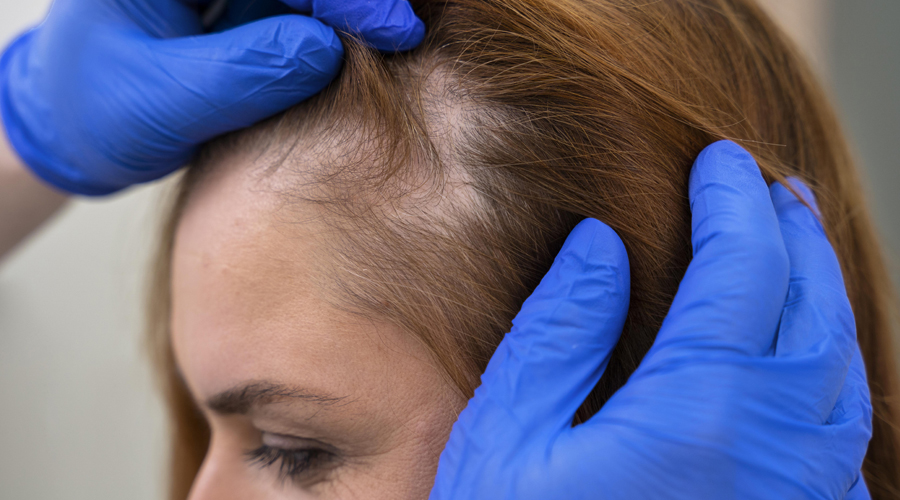
Alopecia Treatment
Alopecia refers to partial or complete hair loss from the scalp or body. It encompasses a broad spectrum of conditions, ranging from common patterns of genetic hair loss to autoimmune-related patchy loss. Each type has a different mechanism, presentation, and treatment approach. Early evaluation and appropriate management are key to achieving the best possible outcomes.
Types of Alopecia We Treat
Androgenetic Alopecia (Pattern Hair Loss)
The most prevalent form of hair loss in both men and women. In men, it typically presents as a receding hairline and crown thinning (Hamilton–Norwood pattern). In women, it often causes diffuse thinning over the crown with preservation of the frontal hairline (Ludwig pattern). It is driven by genetic sensitivity of follicles to dihydrotestosterone (DHT).
Alopecia Areata
An autoimmune condition in which the immune system attacks hair follicles, causing patchy, non-scarring hair loss. Patches can appear suddenly on the scalp, beard, eyebrows, or other body areas. It can progress to total scalp hair loss (alopecia totalis) or complete body hair loss (alopecia universalis) in some cases.
Traction Alopecia
Caused by prolonged mechanical tension on hair from tight hairstyles such as braids, ponytails, or extensions. Typically affects the frontal and temporal hairlines. Early identification and style change can prevent permanent follicular damage.
Scarring Alopecia (Cicatricial Alopecia)
A group of conditions where inflammation permanently destroys hair follicles, replacing them with scar tissue. Early diagnosis and aggressive treatment are critical to halt progression, though regrowth in affected areas is generally not possible once scarring has occurred.
Our Treatment Approach
1. Scalp Examination & Trichoscopy
Dermoscopic evaluation of the scalp provides detailed information about follicular patterns, scalp inflammation, and the extent of hair loss to guide accurate diagnosis and treatment selection.
2. Investigations & Biopsy
Blood tests and, when indicated, a scalp biopsy help confirm the diagnosis, especially in scarring or inflammatory alopecias where accurate classification guides treatment urgency.
3. Medical Treatments
Topical and oral medications are chosen based on the type of alopecia. These may include topical minoxidil, corticosteroids, immunotherapy agents for alopecia areata, or anti-androgen medications for androgenetic alopecia in suitable candidates.
4. Intralesional Injections
Intralesional corticosteroid injections are a first-line treatment option for alopecia areata and certain inflammatory scalp conditions, helping to suppress immune activity in localised areas.
5. PRP / GFC / Exosome Therapy
These regenerative treatments may be used as adjuncts in androgenetic alopecia and certain types of alopecia areata to support follicular health and stimulate regrowth alongside medical therapy.
Benefits of Professional Management
Accurate diagnosis leading to appropriate, targeted treatment.
Halts or slows further hair loss progression with timely intervention.
Improves density and regrowth in suitable types of alopecia.
Prevents permanent follicular damage through early treatment of inflammatory alopecias.
Provides realistic expectations and ongoing monitoring of treatment response.
What to Expect
Treatment outcomes vary significantly depending on the type and duration of alopecia. Androgenetic alopecia requires long-term maintenance. Alopecia areata can be unpredictable with spontaneous remissions and relapses. Scarring alopecia focuses on halting progression rather than regrowth. Your dermatologist will explain the expected course and treatment goals for your specific condition.