

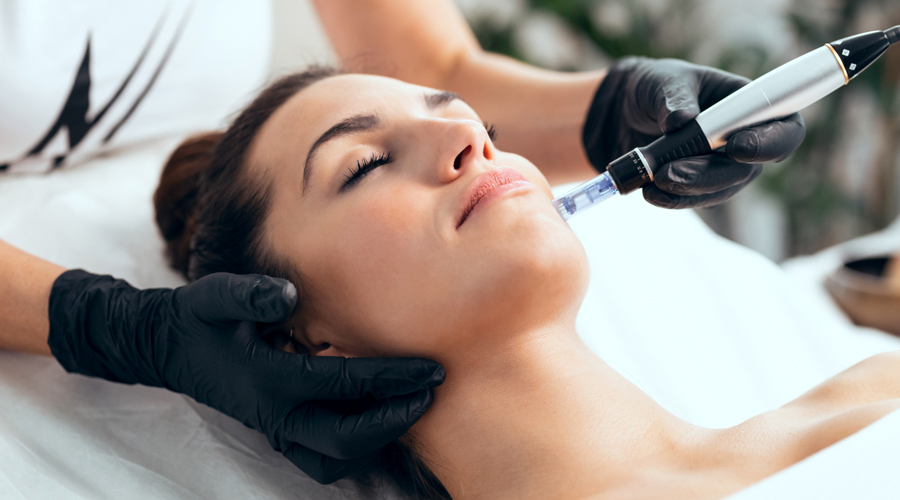
Microneedling
Microneedling, also known as collagen induction therapy (CIT), is a minimally invasive skin treatment that uses a device with fine, sterile needles to create thousands of controlled micro-injuries in the skin. These micro-channels trigger the skin's natural wound-healing cascade, stimulating the production of new collagen and elastin. The result is progressive improvement in skin texture, acne scars, pore size, fine lines, and overall skin quality.
How Microneedling Works
The controlled micro-injuries created by the needles stimulate three phases of natural skin repair:
Inflammation: Growth factors and platelets are released, signalling the skin to begin repair.
Proliferation: Fibroblasts are activated, producing new collagen and elastin fibres.
Remodelling: The new collagen gradually reorganises and matures over several months, improving skin structure and reducing scars.
The micro-channels also significantly enhance the penetration and absorption of topical serums applied during or after the treatment, boosting the overall benefit.
Conditions Treated
Atrophic acne scars (boxcar and rolling scars).
Enlarged pores and rough skin texture.
Fine lines and mild skin laxity.
Stretch marks (striae).
Post-inflammatory hyperpigmentation (used with caution).
Overall skin rejuvenation and dullness.
Scalp microneedling for hair loss (in combination with PRP or minoxidil).
Types of Microneedling
Standard Microneedling (Dermapen / Dermaroller)
Uses a motorised pen device or roller with fine needles at adjustable depths (0.5–2.5 mm). The depth is customised for different areas and skin concerns.
RF Microneedling (Radiofrequency Microneedling)
Combines microneedling with radiofrequency energy delivered through the needle tips. The RF energy generates heat in the dermis, enhancing collagen stimulation and tissue tightening beyond what standard microneedling achieves. Particularly effective for moderate to severe acne scars and skin laxity.
Microneedling with PRP / GFC
Platelet-rich plasma or growth factor concentrate is applied to the skin during or after microneedling. The micro-channels enable deeper penetration of growth factors, boosting collagen induction and accelerating healing.
The Treatment Process
1. Preparation
A topical anaesthetic cream is applied 30–45 minutes before the procedure to minimise discomfort. The skin is cleansed and prepared for treatment.
2. Microneedling Session
The device is systematically passed over the treatment area using appropriate needle depth and speed settings. The face typically takes 20–30 minutes. Pinpoint bleeding may be seen at higher depths — this is a normal part of the treatment response.
3. Post-Treatment Care
Redness, mild swelling, and a warm sensation are expected for 24–48 hours. Gentle skincare, barrier moisturisers, and strict sun protection are essential during recovery. Active skincare ingredients (retinoids, acids) should be avoided for 5–7 days post-treatment.
Benefits of Microneedling
Stimulates natural collagen production for gradual, sustained improvement.
Effective for multiple skin concerns in a single treatment type.
Safe for all skin types including Indian skin, with a low risk of post-inflammatory pigmentation.
Minimal downtime compared to ablative resurfacing treatments.
Can be combined with PRP, GFC, or RF for enhanced results.
What to Expect
A course of 4–6 sessions spaced 4 weeks apart is typically recommended for acne scars and skin rejuvenation. Improvement is gradual, with results becoming more visible over 3–6 months as collagen remodelling progresses. Maintenance sessions every 6–12 months help sustain results. RF microneedling offers more significant outcomes with fewer sessions due to the added thermal component.