

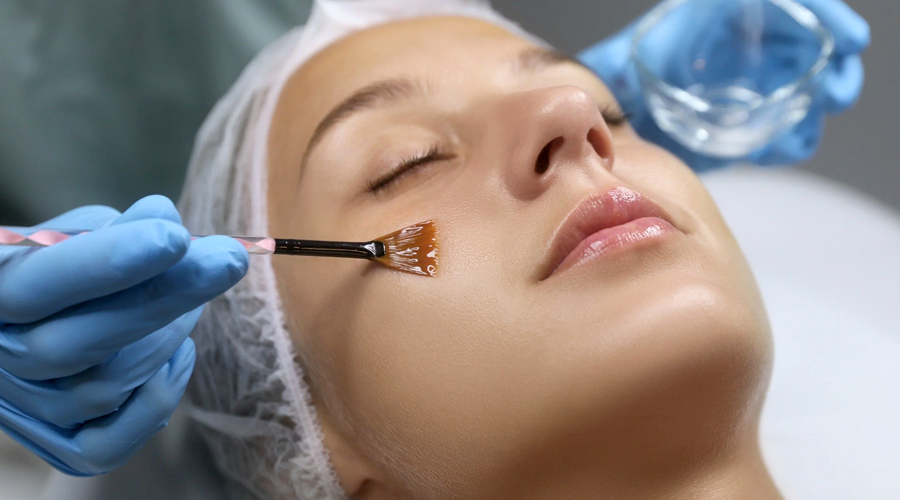
Chemical Peels
Chemical peels are dermatologist-performed skin resurfacing treatments that use carefully selected chemical agents to exfoliate the outer layers of the skin. They improve skin texture, tone, and radiance while addressing concerns such as pigmentation, acne, dullness, and early signs of ageing. The type and depth of the peel are customised based on the skin condition being treated, skin type, and individual tolerance.
How Chemical Peels Work
A chemical solution is applied to the skin, causing controlled exfoliation of the top layers. As the skin peels and regenerates, newer, healthier skin cells come to the surface. Depending on the depth of the peel, the skin renewal process can target the outermost layer (superficial), the upper dermis (medium), or deeper layers (deep peel). Deeper peels achieve more significant results but require longer recovery.
Types of Chemical Peels We Offer
Superficial Peels
Using agents such as glycolic acid, lactic acid, mandelic acid, or salicylic acid at lower concentrations. These treat mild pigmentation, acne, dullness, and uneven tone with minimal downtime. Suitable for most skin types with regular sessions.
Medium Peels
Using trichloroacetic acid (TCA) or stronger concentrations of alpha-hydroxy acids. These address moderate pigmentation, sun damage, and textural concerns. Some peeling and redness for a few days is expected.
Combination Peels
Formulated peels that combine multiple active ingredients targeting specific concerns such as melasma, post-acne marks, or acne-prone skin. Examples include Jessner's peel or salicylic-mandelic combinations.
Conditions Treated with Chemical Peels
Melasma and facial pigmentation.
Post-acne marks and post-inflammatory hyperpigmentation.
Sun tan and uneven skin tone.
Active acne and oily skin.
Dull, tired-looking skin.
Fine lines and early skin ageing.
Rough skin texture and enlarged pores.
The Treatment Process
1. Pre-Peel Preparation
Skin preparation with appropriate topical agents for 2–4 weeks before the peel helps prime the skin, improve tolerance, and reduce the risk of post-peel pigmentation, especially in darker skin types.
2. Peel Application
The peel solution is carefully applied to the cleansed skin and left for a specific duration based on the agent, concentration, and observed skin response. The process is monitored throughout for safety.
3. Post-Peel Care
Gentle moisturisers, sun protection, and avoidance of active skincare ingredients for the recommended period support healing and optimise results. Peeling or flaking typically occurs 2–5 days after the procedure.
Benefits of Chemical Peels
Improves skin tone, texture, and overall radiance.
Reduces pigmentation, dark spots, and uneven colour.
Helps control acne and unclog pores.
Stimulates collagen production for gradual skin improvement.
Safe and effective for a wide range of skin concerns when performed by a dermatologist.
What to Expect
Superficial peels require little to no downtime, while medium peels may involve a few days of visible peeling and redness. Multiple sessions spaced 3–4 weeks apart are usually recommended for best results. Sun protection is essential throughout the treatment course and beyond.