

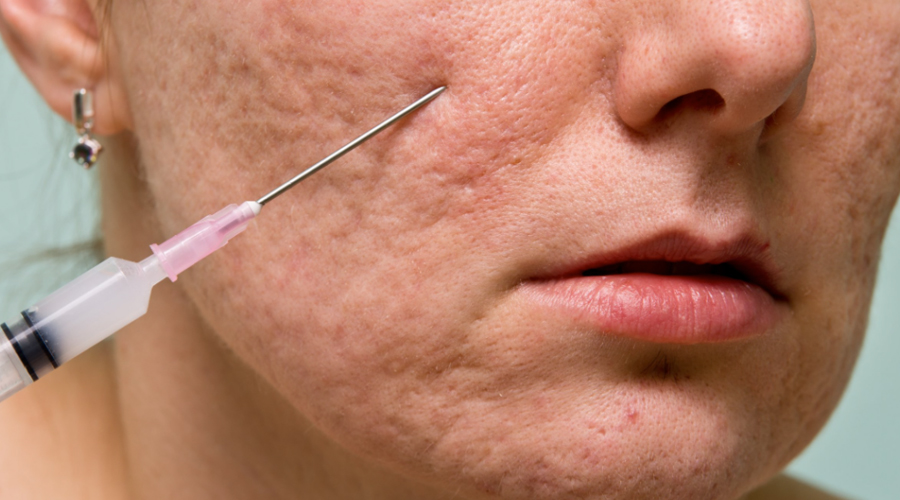
Subcision
Subcision is a minimally invasive surgical procedure specifically designed to treat tethered or depressed acne scars — most commonly rolling scars. It is one of the most targeted and effective treatments for this scar type, directly addressing the structural cause of the depression rather than just resurfacing the skin surface. Subcision is frequently combined with other acne scar treatments for a comprehensive approach.
Understanding Rolling Scars & Why Subcision Works
Rolling acne scars form when fibrous bands of scar tissue develop beneath the skin surface, tethering the overlying skin down to the deeper dermis or subcutaneous tissue. This creates the characteristic wave-like, undulating depressions. Standard resurfacing treatments such as lasers or chemical peels address the skin surface but cannot release the underlying tethering bands — which is precisely what subcision does.
How Subcision Is Performed
A special hypodermic needle or a dedicated subcision needle (Nokor needle) is inserted through the skin adjacent to the depressed scar. The needle is manoeuvred beneath the scar in a fan-like pattern to mechanically cut through the fibrous tethering bands. This releases the skin surface from its downward attachment, allowing it to rise.
The procedure also creates a controlled haematoma (blood pooling) beneath the scar, which stimulates fibroblast activity and new collagen formation in the subcised area, contributing to further elevation and improvement over time.
Types of Scars Treated
Rolling acne scars — the primary indication for subcision.
Broad, shallow boxcar scars with tethering components.
Depressed surgical or traumatic scars with fibrous attachment.
The Treatment Process
1. Assessment
The scar type and degree of tethering are evaluated. Pinching the skin around a scar can help identify rolling scars with fibrous bands — a positive pinch test supports subcision as an appropriate treatment.
2. Procedure
The skin is cleansed and a local anaesthetic is injected into the treatment area. The subcision needle is then inserted and manoeuvred under each identified scar in multiple passes. The procedure takes 20–40 minutes depending on the number of scars treated. Mild bruising and swelling are expected immediately after.
3. Post-Procedure Care
Bruising and swelling typically resolve within 5–10 days. Cold compresses can help reduce initial swelling. Patients are advised to avoid pressure on the treated area and to continue normal skincare without active ingredients for the first few days.
Combining Subcision with Other Treatments
Subcision is most effective as part of a combination approach:
PRP or GFC injected into the subcised area to boost collagen formation and accelerate healing.
RF microneedling or fractional CO₂ laser after subcision to address residual textural irregularities.
Dermal fillers immediately after subcision to prevent re-tethering and provide immediate volumising of the lifted scar.
Benefits of Subcision
Directly targets the structural cause of rolling scars.
Achieves improvement not possible with surface resurfacing alone.
Stimulates new collagen formation in the treated area.
Minimal downtime — bruising resolves within about a week.
Highly effective when combined with complementary scar treatments.
What to Expect
Two to four sessions of subcision are often needed for significant improvement, as some re-tethering can occur between sessions. Maximum improvement is typically seen over 3–6 months as new collagen matures. Your dermatologist will assess your scars and recommend the number of sessions and combination approach most suited to your scar pattern.