

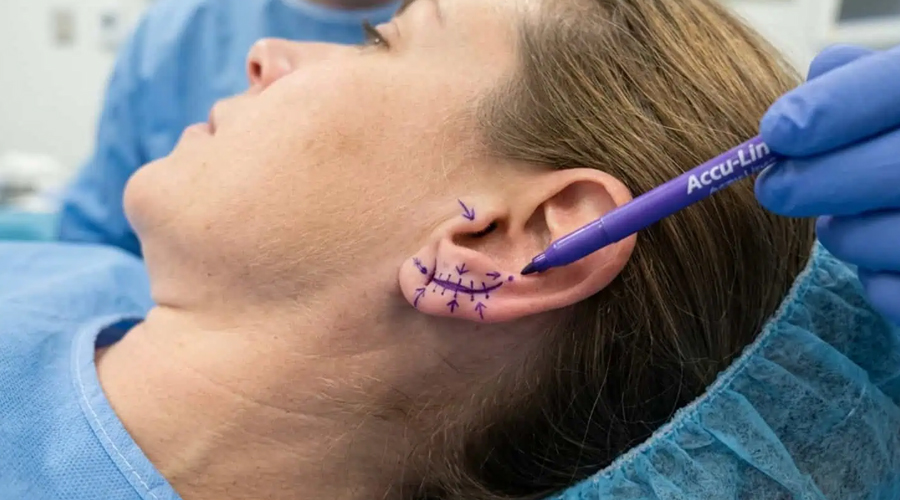
Earlobe Repair
Earlobe repair is a minor surgical procedure performed to correct torn, split, elongated, or stretched earlobe piercings. Earlobes can become damaged from heavy earrings worn over years, accidental tearing, gradual stretching (gauging), or keloid formation at piercing sites. Earlobe repair restores a natural earlobe appearance with a well-healed result, and re-piercing can often be performed after complete healing.
Common Earlobe Concerns
Torn or split earlobes from accidental earring pull-out or trauma.
Stretched or elongated piercing holes from prolonged wear of heavy earrings.
Gauge stretching — enlarged holes from deliberate stretching of the earlobe.
Multiple piercing holes that have merged or become cosmetically unfavourable.
Keloid scars at previous piercing sites causing discomfort or cosmetic concern.
The Repair Procedure
1. Assessment
The extent of the tear, the condition of the earlobe tissue, and the patient's goals for re-piercing are assessed. For keloid scars, the approach may include surgical excision combined with adjuvant treatment to prevent recurrence.
2. Local Anaesthesia
A small amount of local anaesthetic is injected into the earlobe to ensure a completely comfortable, pain-free procedure.
3. Repair
The edges of the tear or stretched piercing are freshened by removing a thin sliver of skin to create clean tissue margins. The repaired earlobe is then closed with fine sutures in a way that minimises visible scarring and recreates a natural contour. For larger repairs or gauge corrections, a more structured excision pattern (such as a z-plasty or triangular technique) ensures the best cosmetic result.
4. Suture Removal & Healing
Fine sutures are removed at 7–10 days. The repair site heals over 4–6 weeks. Re-piercing — through new tissue rather than the original site — can typically be performed after 3 months of complete healing.
Keloid at Piercing Sites
Keloids at piercing sites are managed with surgical excision followed by intralesional corticosteroid injections and, in some cases, silicone sheets or pressure therapy to minimise the risk of recurrence. Multiple sessions of adjuvant treatment are usually recommended after excision.
Benefits of Professional Earlobe Repair
Restores a natural earlobe appearance with minimal visible scarring.
Quick procedure completed under local anaesthesia in a single session.
Allows re-piercing after full healing.
Addresses keloid scars with a comprehensive multi-step approach.
Minimal downtime with simple aftercare.
What to Expect
Earlobe repair heals well in most patients, with a fine, linear scar that fades over 3–6 months. Keloid-prone individuals require specific preventive treatment after repair to reduce the risk of keloid recurrence. Your dermatologist will assess your skin type and earlobe condition and discuss the most appropriate repair technique and aftercare plan.