

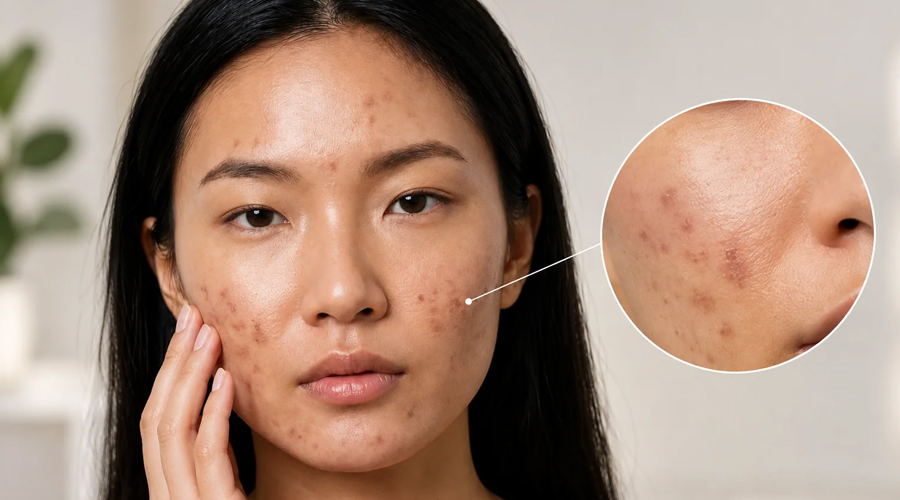
Post-Acne Marks
Post-acne marks are one of the most common residual skin concerns following acne breakouts. They can appear as dark spots, red patches, or flat discoloration and are often confused with acne scars. Unlike scars, post-acne marks involve no change in skin texture — they are a form of pigmentation that develops after inflammation resolves. With the right treatment approach, they can be significantly reduced.
Understanding Post-Acne Marks
When acne heals, the skin's inflammatory response can lead to excess melanin production (post-inflammatory hyperpigmentation, PIH) or temporary redness due to altered blood vessels (post-inflammatory erythema, PIE). PIH presents as flat brown or dark spots and is more common in individuals with medium to darker skin tones. PIE presents as pink or red flat marks and is more common in lighter skin tones.
Types of Post-Acne Marks
Post-Inflammatory Hyperpigmentation (PIH): Brown, tan, or dark flat spots left after acne heals, resulting from excess melanin.
Post-Inflammatory Erythema (PIE): Pink or reddish flat marks caused by dilated blood vessels after inflammation.
Combination: Many individuals have both PIH and PIE simultaneously.
Our Treatment Approach
1. Mark Assessment
Distinguishing between PIH and PIE guides treatment selection. PIH responds well to depigmenting agents and peels, while PIE benefits more from vascular-targeting laser treatments or specific skincare ingredients.
2. Topical Depigmenting Agents
For PIH, topical agents such as niacinamide, kojic acid, azelaic acid, tranexamic acid, retinoids, and vitamin C derivatives are used to suppress melanin production and accelerate fading of dark marks.
3. Chemical Peels
Superficial chemical peels using glycolic, lactic, or mandelic acid promote skin cell turnover and help fade post-acne pigmentation. Peels are customised based on skin type and sensitivity to avoid triggering further pigmentation.
4. Laser Treatments
Laser toning with Q-switched or picosecond laser can target stubborn PIH. For PIE, vascular lasers or intense pulsed light (IPL) may help reduce redness. Treatment selection is based on skin type and the predominant type of mark.
5. Sunscreen & Sun Protection
Daily use of broad-spectrum SPF 50+ sunscreen is essential, as UV exposure significantly delays the natural fading of post-acne marks and can worsen existing pigmentation.
Benefits of Professional Treatment
Accelerates the natural fading of post-acne marks.
Targets the correct type of mark (PIH vs PIE) for effective results.
Reduces uneven skin tone and improves overall complexion.
Prevents worsening of marks through guided skincare.
Supports active acne control to prevent new marks from forming.
What to Expect
Post-acne marks often fade on their own over several months, but treatment can significantly speed up this process. Superficial marks typically respond well within a few months of consistent treatment. Deeper or longstanding marks may take longer. Ongoing sun protection and skincare maintenance are key to sustaining results and preventing new marks from appearing.