

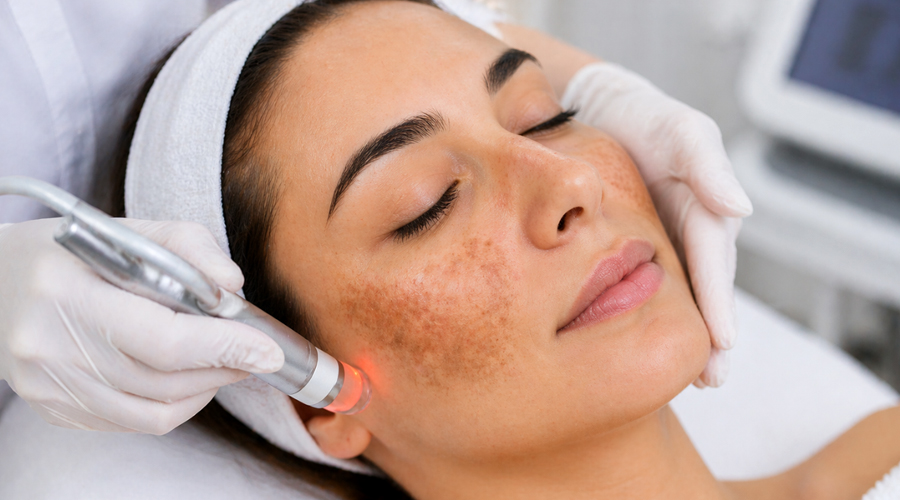
Melasma Treatment
Melasma is a common but often challenging pigmentation condition characterised by symmetrical brown or greyish-brown patches, predominantly on the face. It is more prevalent in women and individuals with darker skin tones. While not a medically harmful condition, melasma can significantly impact self-confidence. Our dermatologists design a structured, multi-modal treatment approach to reduce pigmentation and prevent recurrence.
Understanding Melasma
Melasma occurs due to overactivation of melanocytes — the pigment-producing cells in the skin. Key triggers include ultraviolet (UV) exposure, hormonal changes (pregnancy, oral contraceptive use), heat, and genetic predisposition. The condition can affect the cheeks, forehead, upper lip, chin, and nose bridge. Melasma is classified as epidermal (superficial), dermal (deeper), or mixed based on the depth of pigmentation, which influences treatment selection.
Common Features
Symmetrical brown or greyish patches on the face.
Most common on the cheeks, forehead, nose bridge, and upper lip.
Worsens with sun exposure, heat, and hormonal fluctuations.
Can recur even after successful treatment without proper maintenance.
Our Melasma Treatment Approach
1. Skin Assessment & Pigmentation Depth Evaluation
Clinical examination and Wood's lamp assessment help determine whether the melasma is epidermal, dermal, or mixed. This guides treatment selection, as dermal melasma is more resistant to treatment and requires a different approach.
2. Topical Depigmenting Therapy
Prescription-strength topical agents — such as hydroquinone, kojic acid, azelaic acid, tranexamic acid, niacinamide, or retinoids — are used to suppress melanin production and gradually reduce pigmentation. These are personalised based on skin type and sensitivity.
3. Oral Agents
Oral tranexamic acid or selected antioxidant supplements may be added to the treatment plan for suitable candidates to support topical therapy and reduce pigmentation from within.
4. Chemical Peels
Superficial peels using glycolic acid, lactic acid, mandelic acid, or kojic acid can complement topical therapy by promoting epidermal turnover and improving skin tone. Peels are carefully selected to avoid triggering post-inflammatory hyperpigmentation.
5. Laser Toning
Q-switched Nd:YAG or picosecond laser treatments, when used at appropriate parameters, can target melanin in melasma. These are used with caution as incorrect settings can worsen pigmentation, particularly in darker skin types. Multiple sessions are typically needed.
6. Sun Protection
Broad-spectrum sunscreen (SPF 50+) with UV-A protection, physical sunscreens, and sun-protective clothing are essential components of every melasma treatment plan, as UV exposure is the primary driver of this condition.
Benefits of Professional Treatment
Reduces the appearance of dark patches with a structured plan.
Avoids treatments that can worsen or destabilise melasma.
Combines multiple approaches for improved and lasting results.
Provides long-term maintenance guidance to prevent recurrence.
Safe management adapted for all skin types, including darker tones.
What to Expect
Melasma is a chronic condition that can recur, particularly with unprotected sun exposure or hormonal changes. Visible improvement typically requires several months of consistent treatment. Maintenance therapy and strict sun protection remain essential even after improvement. Your dermatologist will set realistic expectations and review your progress at regular follow-up visits.