

Tattoo Removal
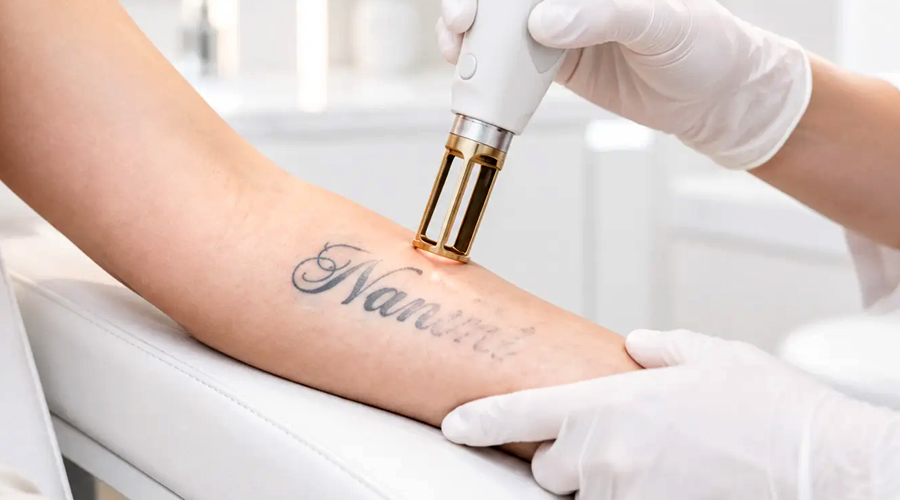
Laser tattoo removal is the gold standard, most effective, and safest method for removing unwanted tattoos. Using high-powered laser pulses, the ink particles within the skin are shattered into microscopic fragments, which are then gradually eliminated by the body's immune system. While complete removal requires multiple sessions, significant fading or full clearance can be achieved in many cases.
How Laser Tattoo Removal Works
Tattoo ink particles are too large for the immune system to clear on its own, which is why tattoos are permanent. Laser tattoo removal uses the principle of selective photothermolysis — delivering intense, ultra-short pulses of laser energy that are absorbed by the tattoo pigment. This causes the ink particles to fragment into smaller pieces that can be recognised and cleared by the body's macrophages over the following weeks.
Different ink colours absorb different laser wavelengths, which is why multi-wavelength laser systems or picosecond lasers are more effective for multi-coloured tattoos.
Factors Influencing Tattoo Removal
Ink colours: Black and dark blue inks respond best; green, yellow, and light colours may require more sessions or specialised wavelengths.
Ink depth and density: Professional tattoos with deeply deposited, dense ink take more sessions than amateur tattoos.
Tattoo age: Older tattoos generally fade faster than newer ones.
Skin type: Darker skin tones require more conservative settings to prevent pigmentation changes.
Tattoo size and location: Larger tattoos and areas with good circulation typically respond better.
Laser Systems Used
Q-Switched Nd:YAG Laser
The most widely used system for tattoo removal. The 1064 nm wavelength targets black, blue, and dark inks, while the 532 nm wavelength targets red and orange pigments. Suitable for all skin types.
Picosecond Laser
Delivers energy in ultrashort picosecond pulses, generating a more powerful photoacoustic shockwave that fragments ink more efficiently, often achieving results in fewer sessions than Q-switched lasers. Particularly effective for multi-coloured tattoos and previously treated tattoos.
The Treatment Process
1. Consultation & Assessment
The tattoo is evaluated for ink colours, density, depth, size, and skin type to estimate the number of sessions needed and to plan the appropriate laser protocol.
2. Treatment Session
A protective eye shield is worn. Topical anaesthetic cream may be applied for comfort. The laser is delivered over the tattoo in a systematic pattern. The session duration depends on the tattoo size. A frosting reaction (temporary whitening) immediately after treatment indicates laser absorption.
3. Post-Treatment Care
Redness, swelling, and mild blistering may occur for a few days after treatment. The area should be kept clean, moisturised, and protected from sun exposure. Sessions are typically spaced 6–8 weeks apart to allow the body time to clear fragmented ink particles.
Benefits of Laser Tattoo Removal
Safest and most effective method for tattoo removal.
Precise targeting of ink with minimal risk to surrounding skin.
Progressive fading or complete removal achievable in suitable cases.
Can be used for full removal or selective fading for cover-up tattoos.
Suitable for all skin types with appropriate laser selection.
What to Expect
Most tattoos require 6–15 or more sessions for significant fading or clearance. Results vary based on ink type, colours, depth, and individual immune response. Complete removal cannot be guaranteed in all cases, but substantial fading is typically achievable. Your dermatologist will provide a realistic assessment after evaluating the tattoo.