

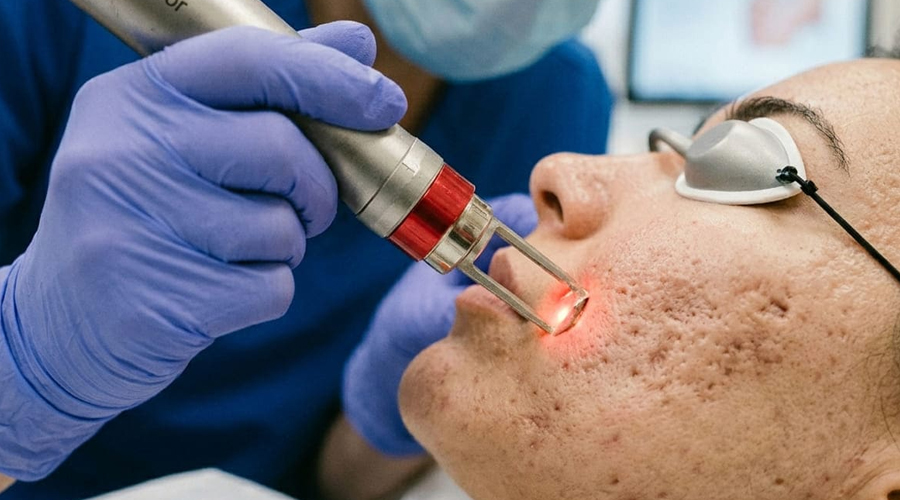
Acne Scar Treatment
Acne scars are structural changes in the skin that result from the skin's healing response to deep or inflammatory acne. Unlike post-acne marks (which are flat pigmentation), scars involve a change in skin texture — either depressions (atrophic scars) or raised tissue (hypertrophic or keloid scars). Effective acne scar treatment requires an individualised approach that combines the right procedures based on scar type, depth, and distribution.
Types of Acne Scars
Atrophic Scars (Depressed Scars)
Ice Pick Scars: Deep, narrow, V-shaped scars that extend into the dermis — the most difficult to treat.
Boxcar Scars: Wide, U-shaped depressions with defined edges — respond well to resurfacing treatments.
Rolling Scars: Broad depressions with sloping edges caused by fibrous tethering beneath the skin — improved with subcision and volume-restoring treatments.
Hypertrophic & Keloid Scars
Raised scars caused by excess collagen production. Hypertrophic scars remain within the original wound boundary, while keloids extend beyond it. These are treated with intralesional injections, laser, and pressure therapy.
Our Acne Scar Treatment Approach
Acne scar treatment is rarely a single-modality approach. A combination of procedures targeting different scar types and depths delivers the best outcomes.
1. Scar Assessment
A detailed evaluation of scar types, distribution, depth, and skin type using clinical examination and dermoscopy guides the treatment plan and helps set realistic expectations.
2. Subcision
A minimally invasive procedure that uses a special needle to break the fibrous bands that tether rolling scars to the deeper tissue. Releasing these bands allows the depressed surface to lift and promotes new collagen formation.
3. Microneedling / RF Microneedling
Controlled micro-injuries using fine needles stimulate the skin's natural collagen and elastin production. RF (radiofrequency) microneedling delivers additional heat energy to the dermis for enhanced remodelling of boxcar and rolling scars.
4. Fractional CO₂ Laser
One of the most effective treatments for moderate to severe atrophic acne scars. Fractional ablative resurfacing creates microscopic treatment columns that stimulate significant collagen regeneration and improve skin surface texture.
5. Chemical Peels
Medium-depth peels can improve superficial atrophic scars and associated pigmentation, complementing deeper scar treatment modalities.
6. Dermal Fillers
Injectable fillers (hyaluronic acid or biostimulators) can provide immediate volumising of depressed scars, particularly for rolling and boxcar scars, offering visible improvement with minimal downtime.
7. PRP / GFC
Used alongside microneedling or as standalone sessions to boost collagen production, enhance tissue healing, and improve skin quality in scarred areas.
Benefits of Professional Acne Scar Treatment
Combination approach addresses multiple scar types simultaneously.
Significant improvement in skin texture and reduction in scar depth.
Improves skin confidence with visible, progressive results.
Safe treatment protocols designed for Indian skin tones.
Realistic expectations set from the first consultation.
What to Expect
Acne scar treatment is a process that requires multiple sessions and several months to show its full effect, as collagen remodelling is gradual. Significant improvement — typically 40–70% — is achievable in most cases with a comprehensive approach, though complete scar elimination is not always possible. Active acne should be well-controlled before scar treatment is initiated.