

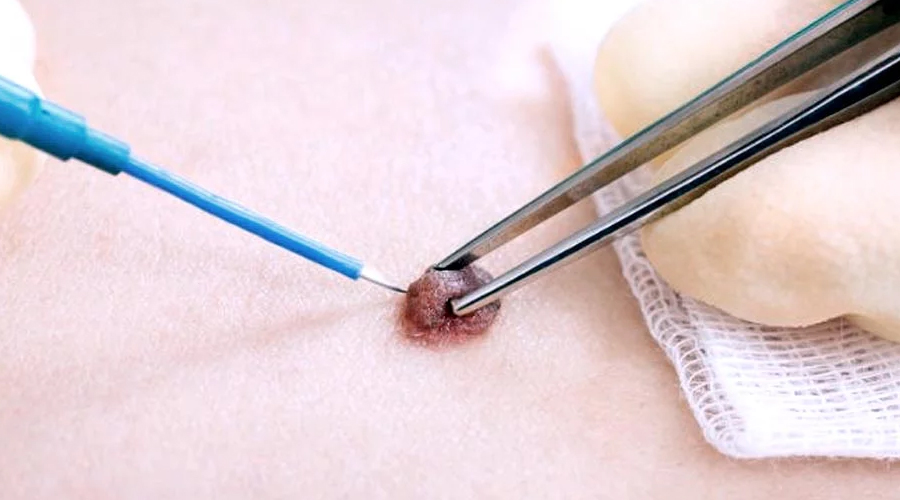
Electrocautery
Electrocautery is a dermatological procedure that uses a controlled, high-frequency electrical current delivered through a fine probe to burn, cut, or remove unwanted skin lesions. It is a quick, precise, and widely used office procedure that allows targeted treatment of a wide variety of benign superficial skin growths with minimal damage to the surrounding tissue. Most procedures can be completed in a single session with local anaesthesia.
How Electrocautery Works
A fine metal probe or needle connected to an electrocautery unit delivers high-frequency alternating current to the target lesion. The electrical energy generates localised heat that destroys the tissue of the lesion — either by desiccation (drying and destroying cells), fulguration (sparking to the surface), or coagulation (sealing blood vessels). Different modes are selected based on the type of lesion and the desired effect.
Conditions Treated with Electrocautery
Skin tags (acrochordons) — quick, effective removal in a single session.
Seborrhoeic keratoses — warty, pigmented benign growths.
Warts — particularly flat warts, common warts, and filiform warts.
Milia — small, white, keratin-filled cysts beneath the skin surface.
Xanthelasma — yellowish cholesterol deposits around the eyes.
Syringomas — small benign tumours of sweat glands.
Dermatosis papulosa nigra (DPN) — small dark lesions common on darker skin tones.
Spider naevi and telangiectasias — small, visible blood vessels.
Small superficial benign lesions requiring removal.
The Procedure
1. Lesion Assessment
Each lesion is examined clinically and with dermoscopy if needed to confirm it is benign and appropriate for electrocautery removal. Atypical lesions are not treated with electrocautery — these require biopsy or excision for histopathological analysis.
2. Preparation & Anaesthesia
The treatment area is cleansed and a topical or local anaesthetic is applied or injected to ensure comfort during the procedure.
3. Electrocautery Treatment
The probe is applied precisely to the lesion, delivering a controlled burst of electrical energy to destroy the target tissue. Multiple lesions can be treated in a single session. The procedure takes minutes per lesion.
4. Post-Procedure Care
A small scab or crust forms at the treated site, which naturally falls off within 7–14 days. Patients are advised to keep the area clean and dry, avoid picking the scab, and apply sun protection once healed. Antibiotic ointment may be recommended to prevent infection during healing.
Benefits of Electrocautery
Quick, single-session removal of most benign skin lesions.
Precise targeting with minimal damage to surrounding skin.
Simultaneous coagulation reduces bleeding during the procedure.
Multiple lesions can be treated in one visit.
Well-tolerated with local or topical anaesthesia.
What to Expect
Most patients experience excellent cosmetic outcomes after electrocautery, particularly for small lesions. A small scar or pigmentation change is possible, especially in darker skin tones. Following post-procedure care instructions carefully helps minimise the risk of post-inflammatory pigmentation and supports optimal healing. Sun protection is important in the weeks after the procedure.